Last updated October 2026. Tested on the PCT, CDT, PNT, CDT, Hayduke Trail and thousands of additional miles on other trails.
Some links below are Amazon affiliate links. If you buy through them I earn a small commission at no cost to you. I bought every pair in this review with my own money.
Hoka Challenger review: the short answer
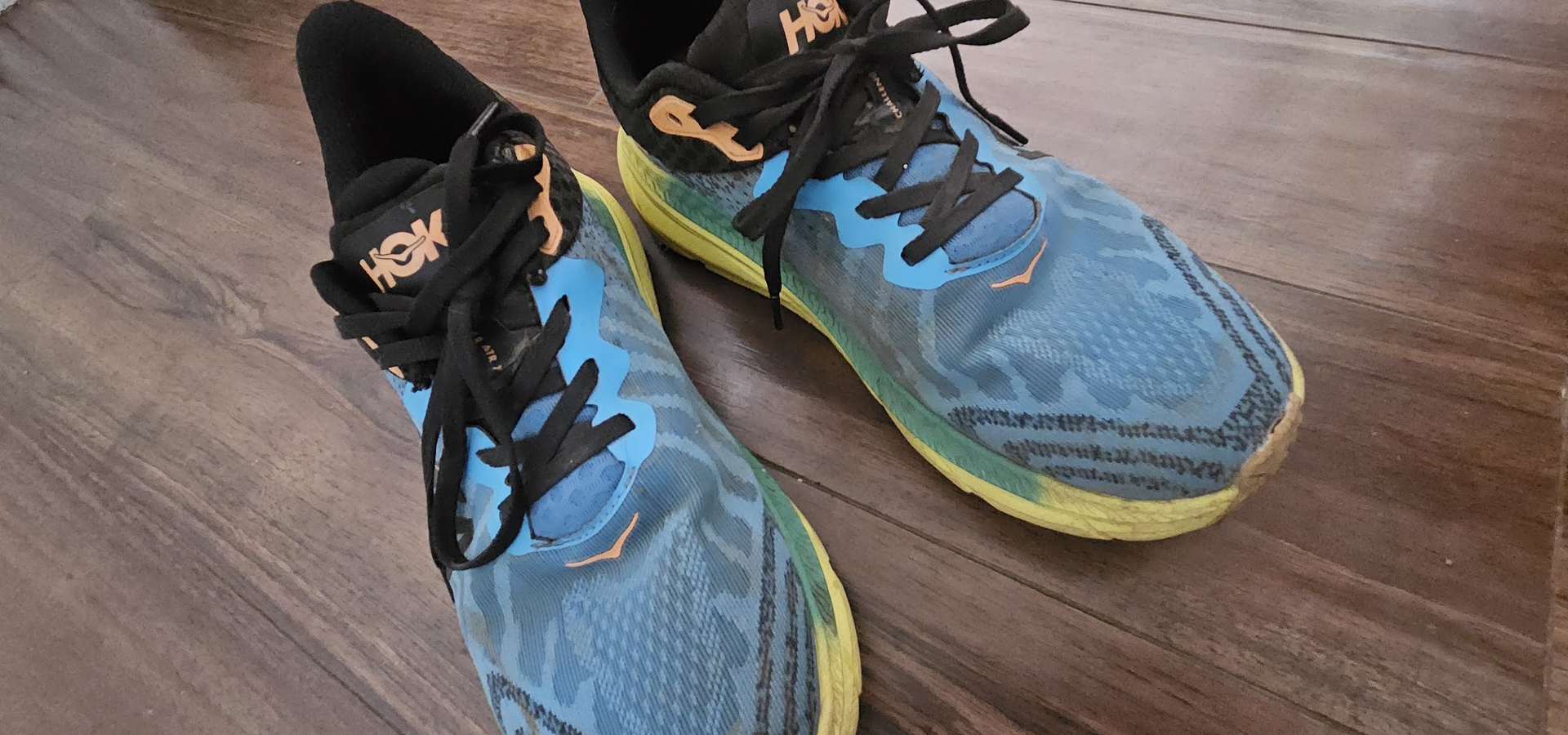
The Hoka Challenger is a great backpacking shoe! It rocks on maintained trail but abrasive, off-trail terrain can be a challenge..er (see what I did there?). It is comfortable and cushioned, and the insole stabilizes your foot well, so the stack height isn’t going to be a problem.
- At 280 to 320 miles the outsole starts to delaminate,
- At 350 to 400 miles the mesh begins detaching from the midsole, and
- At 450 to 520 miles the shoe is genuinely falling off your feet.
On the Hayduke, my Challenger 8s needed Shoe Goo by mile 280. On the PNT’s road-heavy sections, a pair of Challenger 7s went 600+ miles. The challenger 7s were significantly more durable than their predecessors — hopefully it remains that way!
For scrambling, talus and slickrock, I woudn’t recommend the challenger as a first pick. I opt for a zero drop shoe (Lems have been a staple in my kit for quite a few years), although the current Vibram sole iteration of the Altra Lone Peak 9+ is absolutely amazing. With vibram soles and a shift in the heel width, I think the Lone Peak 9+ are the best choice for shoes if your trip is going to have a lot of scrambling and slickrock.
Why am I doing this review?
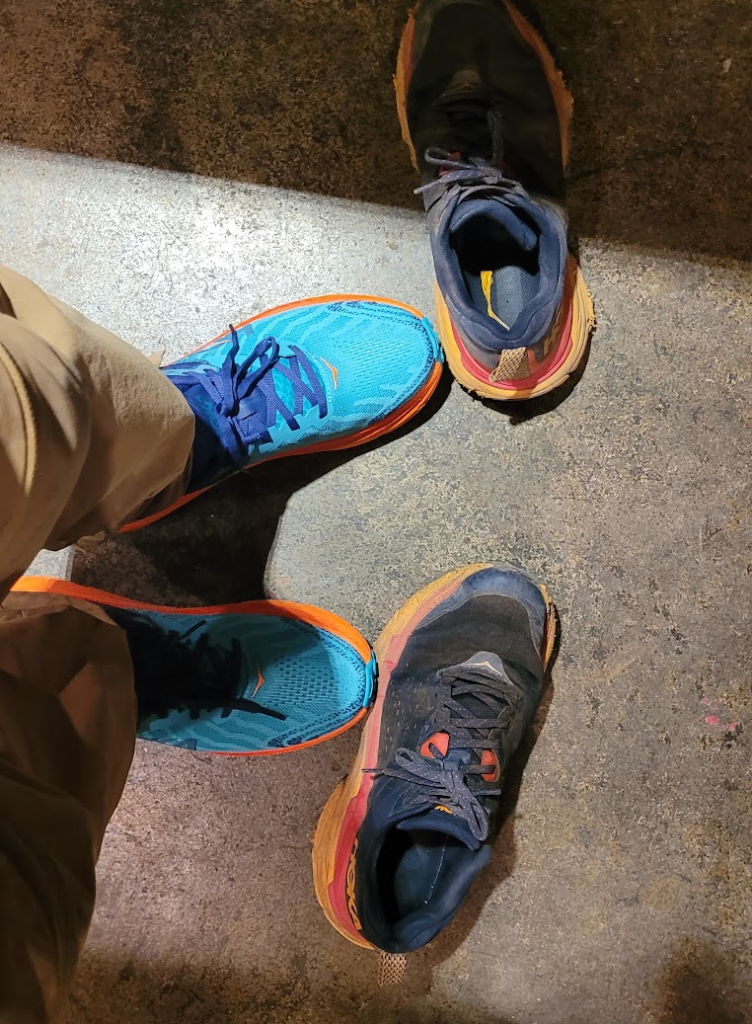
Folks often think that the Challenger is a cushy trail runner that backpackers shouldn’t bother with, often recommending the Speed Goat instead. I’ve hiked in challengers since 2018, and have rocked around 20 pairs of this shoe across 9000 miles on the PNT, CDT, Arzona Trail, Hayduke, and thousands of other miles on lesser-named trails as well as using them for trail and road running.
I’ve bought Hokas through a ton of different avenues including used on eBay, in-person retailers, online retailers like Amazon, Zappos, Fleet Feet, and REI. I’ve even bought two pairs of AliExpress “Fake-Hokas” out of curiosity. They almost certainly came off the same factory floor in China and have held up fine, but are now much harder to find on AliExpress.
How long do Hoka Challengers last?
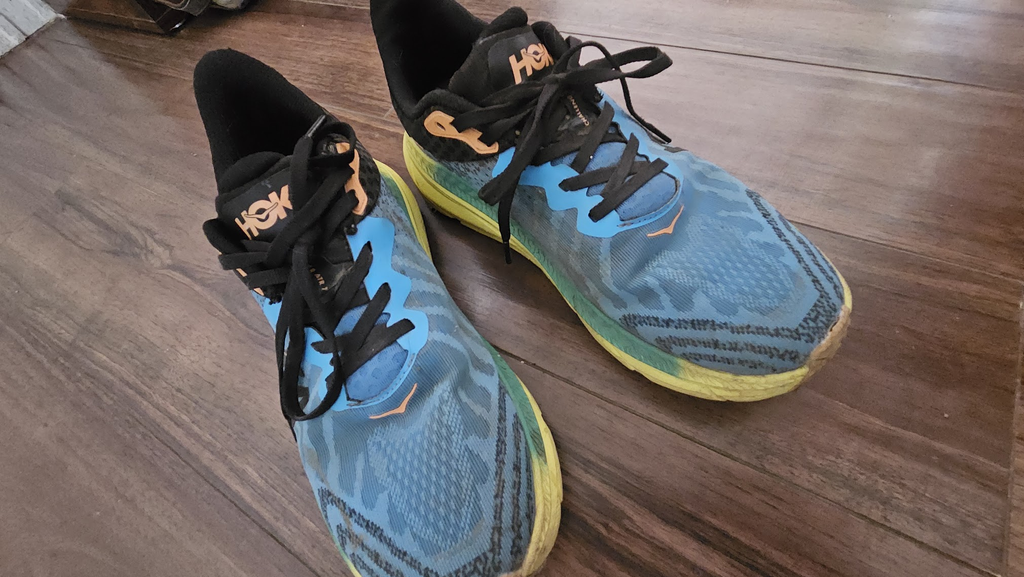
Across almost ever version I’ve worn, the failure pattern is pretty similar.
| Miles | What fails |
|---|---|
| 280 – 320 | Exposed foam outsole and rubber lugs delaminate and wear flat |
| 350 – 400 | Mesh upper shreds inside arch |
| 450 – 520 | Shoe is toast. Falling off your feet |
Terrain seems to shift the wear patterns more than the newly released model year. The ATR 7 model seemed to be exceptionally durable on the PNT, aklthough I think this was because of the endless road miles. The Challenger 8s I most recently procured did not seem to bless me with similar longevity on the Hayduke.
| Shoe | Trail | Result |
|---|---|---|
| Challenger ATR 7 | PNT | 600+ miles per pair. Long road walks along the corridor did most of the favors |
| Challenger 8 | Hayduke | ~280 miles to major structural failure. Sandstone and slickrock shredded the uppers and outsoles |
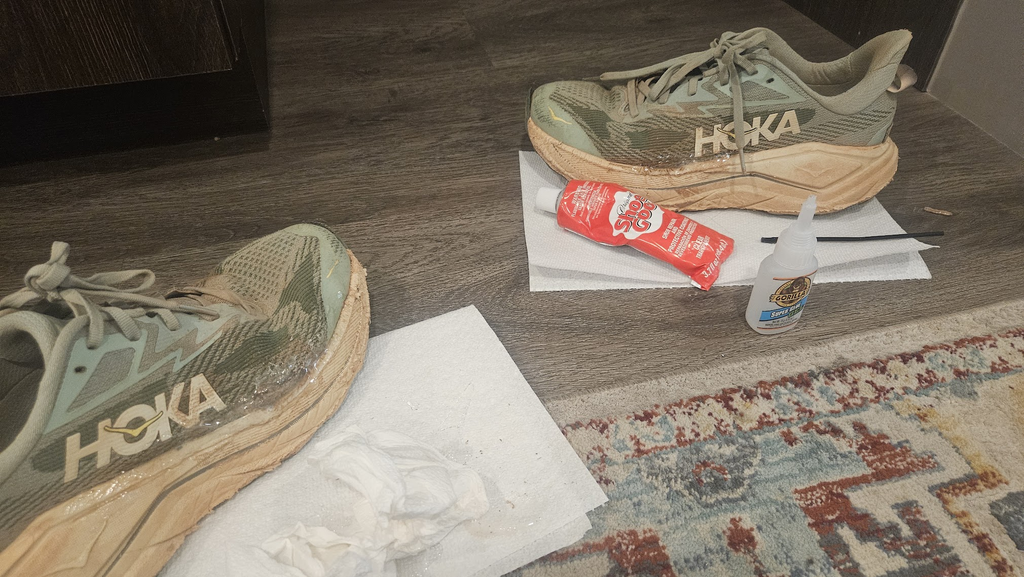
On the Hayduke I field-repaired the Challenger 8s with Shoe Goo and adhesive and hobbled them past 400 total miles in what I’d call terrible disrepair. I would have preferred to be using Lonepeak 9+ for the Hayduke, but due to some achilles injuries and other things, I ended up switching back to my tried-and-true Challengers. Hoka also increase the heel-to-toe drop and stack height on the Challenger 8 shoes, and I’m not a huge fan of these changes.
What I love about the shoe
- Cushion. Excellent for high-mileage days on singletrack.
- The “Rocker geometry”. It rolls through the stride well on well-defined trail, taking pressure off of my toes and heels.
- Insole geometry. This seems to prevent me from turning my ankle more than I would expect, compared to other shoes I’ve used (even some zero drops, where I seem to turn my ankle more frequently)
- Availability. Almost every running store, REI, and online shop seems to stock them, which matters when you need to overnight a pair to a small town.
- Price on older versions. I’ve paid ~$50 to ~$80 for used ATR 4, 5 and 6 pairs. New and current pairs run $100 to $200 depending on where you buy and shipping costs, per my table below.
What I don’t really like
- Durability. Compared to many other shoes, these fellows just aren’t that durable. I’ve decied $80 to $150 every 420 miles is something I have to be okay with.
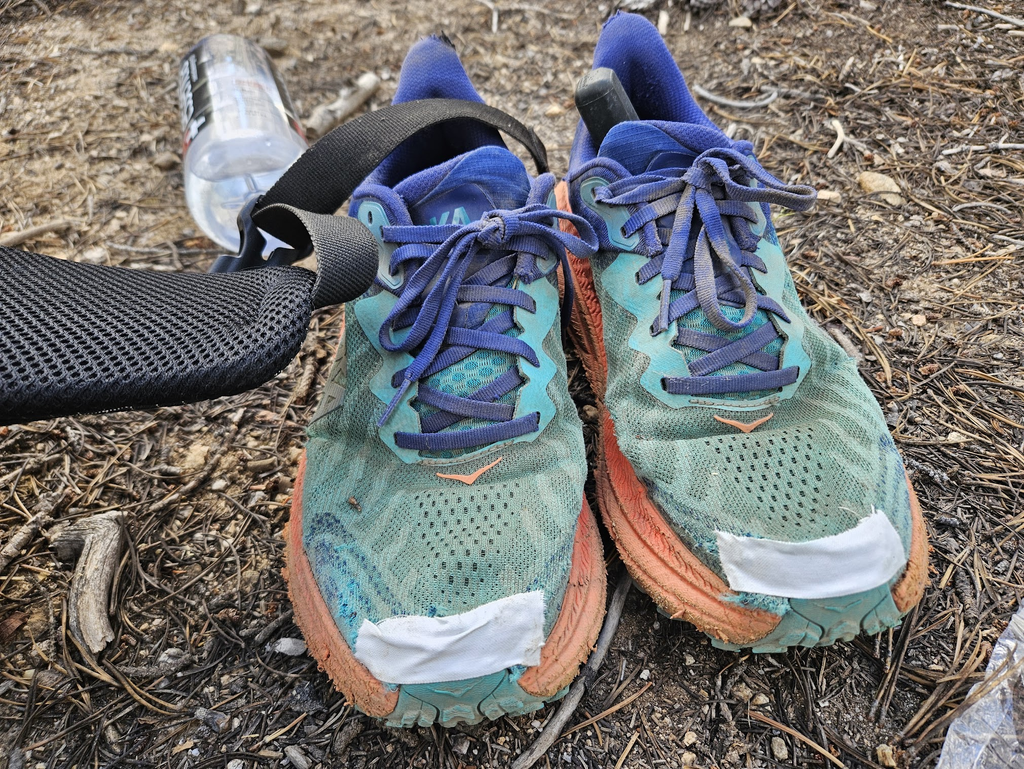
- Traction on wet rock and loose scree. The shoes do great on dirt, but you may definitely feel yourself sliding on rocks and scree, especially as you move into the 300+ range of use with them and the lugs are falling off. The shoes just don’t have the tread of a good Vibram outsole (and I have not liked speedgoats when I’ve tried them).
- Abrasive terrain. Slickrock, sandstone, tallus and scree will just attack the uppers and outsole. This will significantly reduce milage of use unless you’re at the ready with your repair kit.
Hoka Challenger specs (current version, Challenger 8)
| Spec | Men’s | Women’s |
|---|---|---|
| Weight | 8.7 oz (US 9) | 8.2 oz (US 8) |
| Stack height (heel / forefoot) | 42 mm / 34 mm | 38 mm / 30 mm |
| Drop | 8 mm | 8 mm |
| Outsole | Durabrasion rubber, 4 mm lugs | same |
| Midsole | Compression-molded EVA | same |
My easy-to-track-down purchase history I’ve scraped for pricing
Thru-hiking often means ordering shoes to random zip codes, and sometimes taking whatever’s on the shelf in a mountain town if your feet are just yelling at you and you coudn’t ship something from trail. Here’s a pretty good run down for receipts I could find in my email inbox, although I’ve purchased many more pairs than this.
| Date | Source | Model | Price |
|---|---|---|---|
| Dec 2018 | eBay | Challenger ATR 4 | $50.95 |
| Mar 2021 | REI Used | Challenger ATR 5 (Ebony) | $70.95 |
| Apr 2021 | REI Used | Challenger ATR 6 (Black) | $78.00 |
| Jul 2022 | REI Online | Challenger ATR 6 (Outer Space) | $140.00 |
| Dec 2022 | REI In-store | Challenger ATR 6 | $112.93 |
| Apr 2023 | REI Online | Challenger 7 (Ceramic/Orange) | $155.76 |
| 2024 | AliExpress | OEM “Fake-Hoka” (2 pairs) | ~$45 – $55 |
| Aug 2024 | eBay | Challenger 7 (Ocean Orange) | $70.00 |
| Jun 2025 | Zappos | Challenger 7 (Honey/Black) | $102.50 |
| Jul 2025 | Als.com | Challenger 7 (Castlerock) | $106.90 |
| Jul 2025 | Fleet Feet | Challenger 7 (size 9) | $118.32 |
| Apr 2026 | Zappos | Challenger 8 (Jade/Truffle) | $192.94 |
This excludes purchases in trail towns and a bunch of amazon overnighting and other things. In general, used and last-generation pairs ran $50 to $100, and the one emergency overnight on the Hayduke cost me almost $200 ($30 to overnight). Yikes!
Current and recent versions: Hoka Challenger 7 (Amazon) | Altra Lone Peak 9+ (Amazon)
Hoka Challenger vs. Altra Lone Peak 9+ for backpacking?
| Hoka Challenger | Altra Lone Peak 9+ | |
|---|---|---|
| Best for | Maintained trail, long road sections, high-mileage cushion | Scrambling, talus, off-trail, wet rock |
| Outsole | Durabrasion rubber, 4 mm lugs | Vibram Megagrip |
| Drop | 8 mm on ATR 8, was 5mm before | 0 mm |
| Cushion / stack | Max cushion (34 mm forefoot) | 25 mm stack |
| Weight (men’s) | ~18 oz pair (US 9) | ~21 oz pair (US 9) |
| Weakness | Outsole and mesh durability | A little sloppy in the heel |
The scrambling alternative
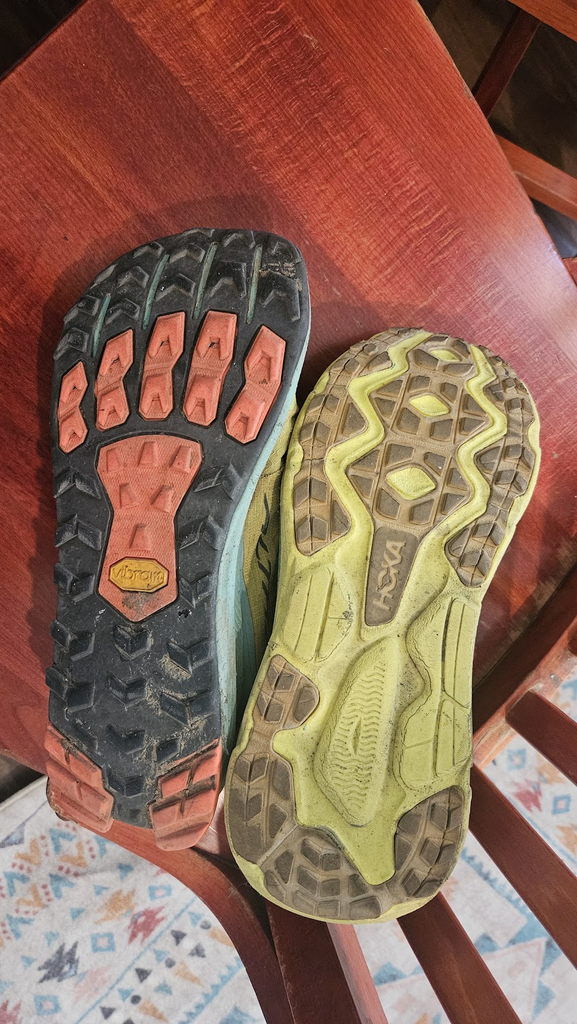
For off-route navigation, talus hopping, or technical canyon scrambling, I tend not to recommend the Challenger, and advise getting a shoe with a Vibram outsole. The Altra Lone Peak 9+ is the one I’d currently pick and recommend. The sticky sole and lower profile give far better traction and stability on scrambly terrain, and the rubber holds up better than the lugs on the Challenger. The Altra Lone Peak 9+ is the first Lone Peak with a Vibram outsole, and the first Lone Peak I’ve actually liked! I disliked prior Lone Peak iterations because the heel always felt sloppy to me and gave me blisters, and the outsole wasn’t much better than a Challenger.
Frequently asked questions
Is the Hoka Challenger good for backpacking?
Yes! It’s comfortable and well cushioned for high-mileage days. But it does wear out fast on abrasive terrain, and just won’t grip too well on wet rocks compared to a Vibram sole.
How many miles do Hoka Challengers last?
In my experience, 280 to 320 miles before the outsole starts to delaminate, 350 to 400 before the mesh starts detatching from the upper, and 450 to 520 before the shoe is probably too degraded to use. Road-heavy trails may improve the miles you get, while bush whacking and a lot of side stepping on scree will easily drop durability.
Are Hoka Challengers good for thru-hiking?
They’re my default shoe for well-defined thru-hike miles. I usually budget 420 to 450 miles between pairs. Sometimes I intentionally rock it to 500-ish. But by 380, you’re likely gonna be thinking about replacing them.
Can you repair Hoka Challengers in the field?
Partly. Shoe Goo and adhesive got my Challenger 8s past 400 miles on the Hayduke, but the outsole and upper were already failing. Duct tape and other things will be underwhelming. It’s worth using some quick-setting Gorilla Glue to reattach the lugs as they start falling off.
Which Hoka Challenger version should I buy?
I don’t really like the 8s. The increased stack height and increased heel-to-toe drop just makes the shoe ride differently. So, as of right now, I’ll recommend an old, cheap pair of ATR 7s =). But hey, I did use the 8s fine… I just prefer the 7s right now.
Related: Hayduke Trail guide | Pacific Northwest Trail guide | Hiking pants review