The Tahoe Rim Trail: A Complete Thru-Hike Guide
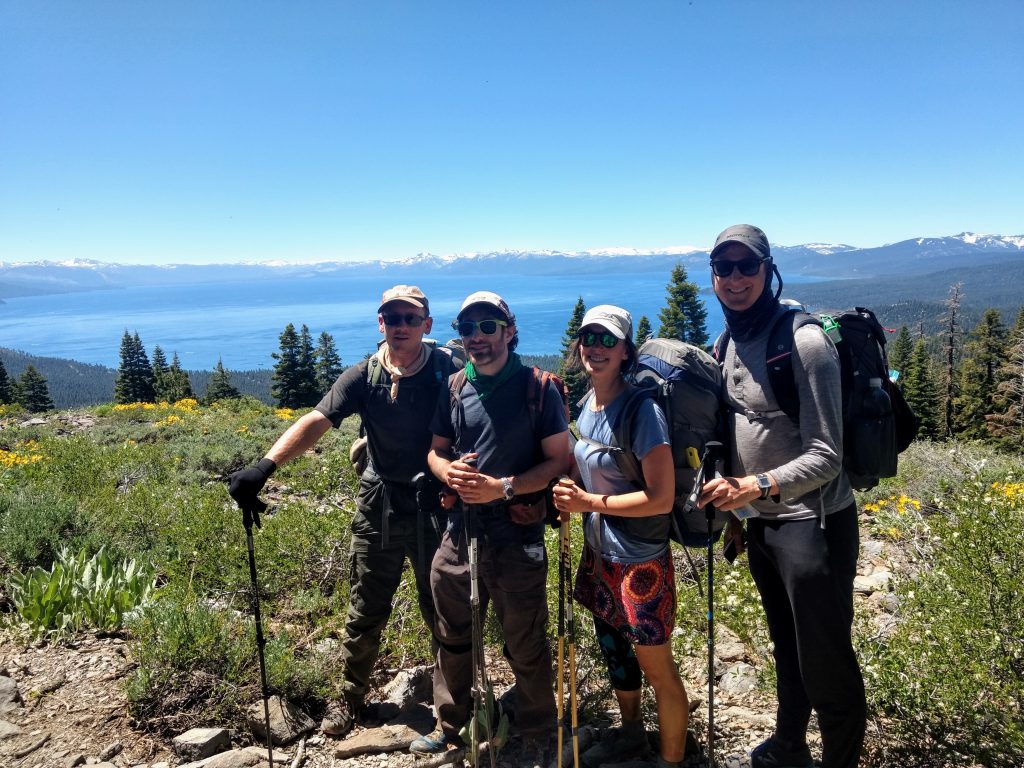
The Tahoe Rim Trail is a 165-mile loop around Lake Tahoe that is genuinely exceptional, and in many ways better than the JMT, and dramatically underrated as a thru-hike. It’s doable in a long week (8-9 days), requires no lottery permit, and delivers some of the most sustained above-treeline ridgeline hiking in California. I’ve done it twice: once in 2019 with three friends who were all completing their first thru-hike, and again in 2024.
The trail circles Lake Tahoe at high elevation, mostly above 7,000 feet with significant time above 9,000 feet. It passes through six counties and two states (California and Nevada). The lake views are relentless and legitimately stunning; you see it from nearly every ridge. My full 2019 travel itinerary is linked here.
Contents
The Basics
How Long Does It Take?
The TRT is 165 miles. A reasonably fit hiker doing 18-22 mile days can complete it in 8-9 days. That’s the right target. In my 2019 trip, three first-time thru-hikers completed it in 9 days, and we weren’t rushing. If you want to move faster you can push it to 7 days, but there’s no reason to hurry this one. The scenery rewards a relaxed pace.
The 2019 trip was a heavy snow year. The Desolation Wilderness section, especially the north side of Dick’s Pass, required some genuine route-finding in deep snow. In a normal year, the trail is significantly more straightforward. Build extra days into your schedule in high-snow years.
Season and Timing
The TRT is a summer trail. At 7,000-9,000+ feet, it holds snow well into late spring. The reliable window is mid-July through September. The sweet spot is late July to mid-August: snow is gone, water sources are still running, and the fall crowds haven’t started yet.
In a heavy snow year (like 2019), wait until late July to start. In a low snow year, you can push the start earlier. Check current conditions on the TRT Association website before committing to a start date.
Afternoon thunderstorms occur in July and August. They’re less violent than Colorado’s but real. Plan to be off exposed ridges by early afternoon if storms are building.
Direction and Starting Point
The TRT is a loop. You can start anywhere. Most hikers start at one of the major trailheads near South Lake Tahoe: Echo Summit (the most common), Spooner Summit (on the Nevada side), or Tahoe City. My 2019 trip started at Echo Summit.
Direction doesn’t matter much. Clockwise puts you into Desolation Wilderness early (the hardest and most scenic section). Counterclockwise saves it for later when you’re fitter. Either works.
Permits
The TRT itself requires no permit. However, if your route passes through Desolation Wilderness (it will, unless you take an alternate) you need a free wilderness permit. Self-issue at the trailhead register; it’s not a lottery, just a sign-in.
Desolation Wilderness has a campsite quota system during peak season (June 15 through Labor Day). In practice, this matters most on weekends. The quota is 700 people per day in the wilderness, which is large enough that thru-hikers rarely have issues. Just don’t count on camping at the popular lake basins on Saturday nights in July.
If your route crosses into Nevada (the eastern section of the TRT does), there are no additional permit requirements.
Resupply
The TRT is one of the most resupply-friendly long trails in the country. Because it loops around an actively used resort destination, you’re never more than a few days from a town. My 2019 trip used three resupply stops:
| Stop | When | Access | Notes |
| Tahoe City | Day 4 | On-trail | Full grocery store, restaurants, gear shop. The best resupply stop on the loop. Take a zero if you want one; it’s a great town. |
| Incline Village | Day 6-7 | Short hitch | Grocery store, restaurants. Good mid-trail resupply on the Nevada side. Easy hitch from the trail. |
| South Lake Tahoe | Day 8 | Short hitch | Full service city with everything you need. If you’re ending here, this is your finish celebration. |
In a normal year you can comfortably do the TRT in 8-9 days with just these stops. You could also add Echo Lake Chalet (early in the route from Echo Summit) for a coffee and snack resupply if your timing works; it’s a charming stop but limited selection.
Unlike the PCT or CDT, you really don’t need to mail resupply boxes here. The towns are genuinely good and on-trail access is excellent. Just buy food as you go.
Why I Navigate With a Garmin Watch
A Garmin Fenix is the best navigation upgrade I’ve made to my backpacking kit. It does four things my phone can’t.
- It sips power. The battery is tiny, so a typical power bank tops it up 10+ times. In my experience it runs about 4 whole days of solid navigation between charges.
- Built-in flashlight. The Fenix 7X (and some other Fenix models) has an LED flashlight. It’s one of the features I use most on trail.
- More time in nature. The course lives on my wrist, so my phone stays in my pocket.
- Off-course alerts. It pings you when you drift roughly 150 feet off the course. It has saved me MANY miles of unnecessary backtracking.
Garmin Fenix 7X Solar Sapphire on Amazon Read my Garmin watch review
Affiliate link: if you buy through it I may earn a small commission at no extra cost to you. That’s how this site pays for my gear-testing habit.
Garmin Courses: TRT Resupply Splits
4 Garmin courses (170 miles), one per resupply leg. Download the ZIP, import the TCX files into Garmin Connect, and send them to your watch.
Each file is one stretch between resupply stops from my plan, with the start and end loaded as named course points. I split them up because Garmin Connect chokes on whole-trail files. The loop is split into four legs, hiked clockwise. Stops: Kingsbury Grade (South Lake Tahoe), Echo Lake, Tahoe City, and Mt Rose Summit (Incline Village).
Heads up: Unlike my other hikes, I did have my Garmin on the Tahoe Rim Trail, and these legs follow my resupply stops. The tracks come from third-party sources, so accuracy isn’t guaranteed. Carry backup navigation, and check the course against your own maps. If a long leg won’t import, split it smaller with the Trail GPX Converter.
Getting There
From the Bay Area or Sacramento
South Lake Tahoe is about 3.5 hours from San Francisco and 2 hours from Sacramento. The easiest approach is to drive. Parking at Echo Summit is free and unlimited for thru-hikers. If you’re coming without a car, South Lake Tahoe has bus connections from Sacramento (South Tahoe Express) that run daily. From South Lake Tahoe, it’s a 30-minute drive or hitch to Echo Summit.
From Reno or the Nevada Side
Reno is 45 minutes from Spooner Summit on the Nevada side. If you’re flying in, Reno-Tahoe International is the closest airport. Rent a car or hitch from Reno to your starting trailhead. Uber/Lyft works from Reno to Incline Village and the Nevada TRT trailheads.
Getting Out
Since it’s a loop, you end where you started. If you parked at Echo Summit, your car is there. If you started via transit, hitch or take a bus back from South Lake Tahoe to wherever you came from.
Gear Notes
The TRT is a summer trail at altitude. Gear decisions are relatively straightforward:
- Shelter: The TRT was the first trip where I fully committed to bivy camping. Being able to throw a bivy down almost anywhere without the setup overhead of a tent is genuinely liberating on a loop trail like this. If you’re expecting persistent weather or want more protected sleep, a lightweight tent or tarp is the right call instead.
- Sleep system: A 20-30 degree bag or quilt is appropriate for most of the season. The nights at 8,000+ feet get cold even in August. In early or late season, consider a warmer bag or a liner.
- Snow gear: In a heavy snow year (check before you go), microspikes and trekking poles are valuable for the Desolation Wilderness section. Dick’s Pass can be technical in deep snow. In a normal year, you don’t need snowshoes or an ice axe.
- Shoes: I use Hoka Challengers. The TRT terrain is well-maintained trail with some rocky sections; nothing that requires aggressive technical footwear. Whatever shoe you normally hike in will work fine.
- Bear canister: Required in Desolation Wilderness. If you’re starting at Echo Summit and going through Desolation early, pick up or bring a bear canister. I used a BV450. You can ship it home from Tahoe City.
- Water filter: The TRT has reliable water sources through most of the route. A standard filter (Sawyer Squeeze, BeFree) is fine. The Nevada section can be drier. Check current conditions before that stretch.
My 2019 Gear List
Trip Report: 2019 with Friends
In July of 2019, I took three friends on their first thru-hike: Natals, Ben, and Ania, a Spanish friend who joined for the first leg. We completed the TRT in 9 days, starting from Echo Summit. 2019 was a heavy snow year, which added some spice to the experience.
The Desolation Wilderness section was exactly as described: type 2 fun, especially on the north side of Dick’s Pass. Ania, who had limited snow experience, got a quick education. The descent from Dick’s Pass was steep enough that Ben and Ania were genuinely concerned for their safety at points. Everyone survived. The views from the top were worth the descent drama.
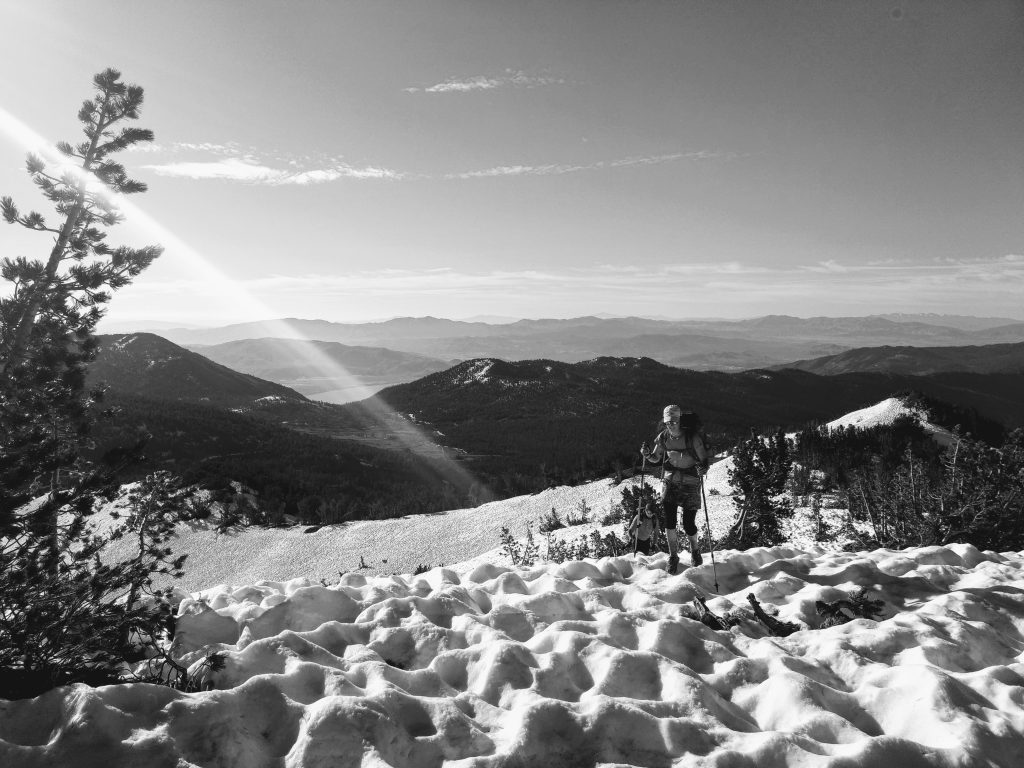
Ania got off at Tahoe City on day 4 as planned, catching a ride back to Sacramento. The remaining three of us continued counterclockwise through the Nevada section (Incline Village resupply on day 6) and finished back at South Lake Tahoe on day 9. Natals and Ben completed their first thru-hike. Kylie and I had type 1 fun throughout.
The TRT is better than the JMT in several ways I didn’t expect: the resupply is easier, the permit situation is saner, and the variety of terrain (the Nevada ridgelines are genuinely different from the granite-basin Sierra you get on the JMT) keeps things interesting throughout. It’s not as iconic as the JMT but it’s a more relaxed experience. Strongly recommended, especially for groups or first-timers who want a serious but achievable thru-hike.